

Table of Contents
The modern human exists in a state of biological misalignment. We have spent roughly 99.9% of our evolutionary history in direct, unmediated contact with the natural world, yet we now spend 93% of our lives indoors. At Havena, we view this shift not merely as a loss of “scenery,” but as a profound metabolic and immunological crisis. To understand the decline of the modern immune system, one must look beyond genetics and nutrition toward the exposome: the sum of all environmental exposures an individual encounters over a lifetime.
The Urban Toxicity: The HPA Axis Under Siege
The contemporary metropolis is an aggressive environment for the human nervous system. We are currently witnessing a silent epidemic of chronic inflammation, driven by two primary urban stressors: particulate matter (PM2.5) and acoustic pollution. When we navigate a city, our biology is in a constant state of hyper-vigilance.
Particulate matter, specifically PM2.5, is small enough to bypass the blood-brain barrier.1 Once inhaled, these microscopic particles trigger a systemic inflammatory response. The body perceives these pollutants as pathogens, activating the Hypothalamic-Pituitary-Adrenal (HPA) axis.2 This leads to a persistent secretion of cortisol—the primary stress hormone. While acute cortisol spikes are necessary for survival, chronic elevation suppresses the production of protective cytokines and impairs the maturation of white blood cells.3+2
Simultaneously, the “acoustic canopy” of the city—the low-frequency hum of traffic, construction, and ventilation systems—acts as a persistent bio-hazard. In my lab, we track the heart rate variability (HRV) of executives working in high-density urban zones. The data is consistent: their sympathetic nervous system is locked in “on” mode. This chronic sympathetic dominance prevents the body from entering the “Rest and Digest” state required for cellular repair. The executive HPA axis is essentially red-lining, burning through biological reserves just to maintain baseline cognitive function. This is the physiological cost of the modern office.
The Chemistry of the Forest: Phytoncides as an External Immune System
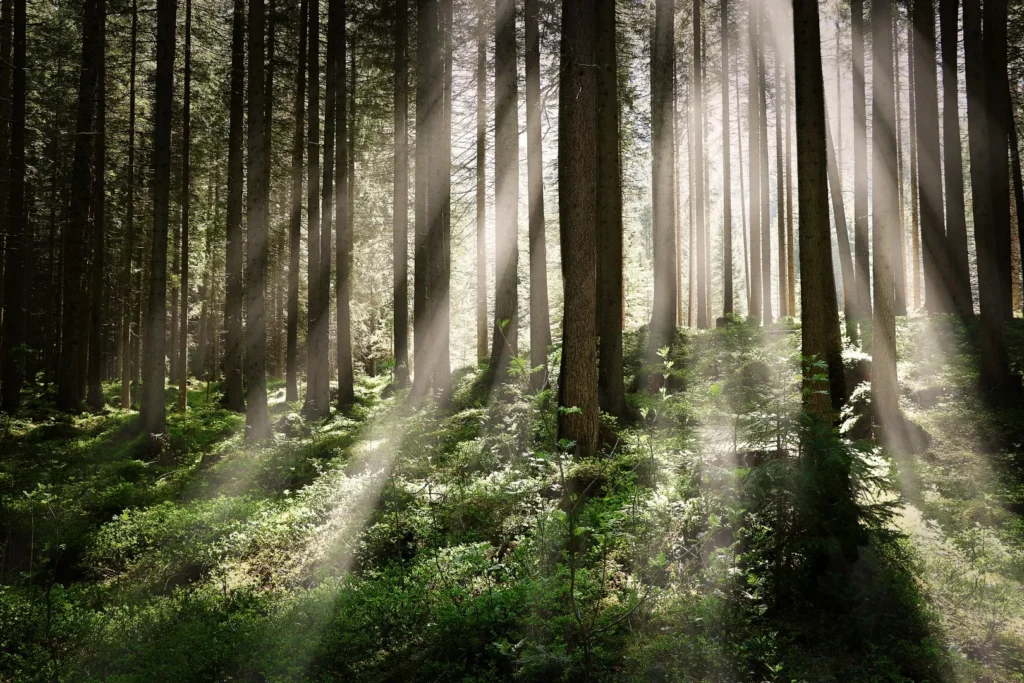
To find the antidote, we must look to the primeval forests of Poland, such as Białowieża, where the air is not merely “clean” but chemically active. The trees themselves are pharmaceutical factories. They emit phytoncides—volatile organic compounds (VOCs) that serve as the plant’s defense mechanism against rot, insects, and fungi.4
When you walk through a coniferous forest, that distinctive scent of pine and resin is actually a concentrated dose of 5$\alpha$-pinene, 6$\beta$-pinene, and limonene.7 These are not just pleasant aromas; they are bioactive terpenes.8 For the tree, these chemicals are an external immune system. When we inhale them, they become part of ours.+1
Phytoncides work through the olfactory system and direct absorption into the bloodstream via the lungs.9 Once inside the human body, these terpenes reduce the production of stress hormones (cortisol, adrenaline, and noradrenaline).10 Research indicates that 11$\alpha$-pinene specifically possesses potent anti-inflammatory properties by inhibiting the NF-12$\kappa$B pathway—a major regulator of inflammation in the body.13 By reducing the systemic “noise” of inflammation, phytoncides allow the human immune system to refocus its energy on internal surveillance and cellular maintenance.+2
NK Cells & Cytotoxicity: The Mechanism of Surveillance
The most compelling evidence for forest-derived immunity lies in the activity of Natural Killer (NK) cells. These are specialized white blood cells that play a critical role in the innate immune system.14 Unlike other cells that require a specific antibody to act, NK cells are the “special forces” of the body; they can identify and destroy virally infected cells and early-stage tumor cells on sight.15+1
The work of Dr. Qing Li has been foundational in this field.16 His studies on Shinrin-yoku (Forest Bathing) have demonstrated that a two-day stay in a forest environment can increase NK cell activity by as much as 40%. This effect is not fleeting; the boosted immune function can persist for up to 30 days after returning to the city.17+1
The mechanism behind this is the increased production of intracellular anti-cancer proteins: perforin, granzyme A, and granulysin.18 When we are exposed to forest air rich in phytoncides, the number of NK cells in our blood increases, and more importantly, their cytotoxicity—their ability to kill—is enhanced. The phytoncides appear to signal the body to upregulate the expression of these cytolytic proteins.19
In my own observations in Poland’s high-latitude forests, we see a direct correlation between the density of the old-growth canopy and the “readiness” of the immune system in local populations. The forest acts as an exogenous regulator of our endogenous defense systems.
Cognitive Function & Air Quality: Clearing the Neural Fog
The benefits of the forest extend beyond the blood and into the brain.20 In urban environments, high carbon dioxide levels and recirculated air lead to “brain fog”—a state of reduced executive function and impaired decision-making.21 In contrast, “Zone I and II” biomes (undisturbed primary forests) offer a unique atmospheric profile: high oxygen purity and a high concentration of negative air ions.+1
Negative ions, particularly those found near moving water or in dense forests, have been shown to increase the flow of oxygen to the brain, resulting in higher alertness and decreased mental fatigue.22 This environment actively reduces neuro-inflammation. When we measure the EEG (electroencephalogram) of subjects in a forest setting, we observe a shift from high-frequency Beta waves (associated with anxiety and focused task-work) to Alpha and Theta waves (associated with creative flow and deep relaxation).23+1
Furthermore, the “soft fascination” offered by the fractal patterns in nature—the way branches split or leaves are arranged—requires no directed attention.24 This allows the prefrontal cortex to recover from the “directed attention fatigue” caused by screens and spreadsheets.25 You are not just breathing better; you are thinking with a cleaner neural slate.+1
Light & Dark: The Biological Necessity of the Dark Sky
We cannot discuss environmental physiology without addressing the circadian rhythm. The forest is not just a source of phytoncides; it is a sanctuary of natural light cycles.26 Modern life has effectively erased the night. Light pollution, specifically blue light from LED streetlights and devices, suppresses the production of melatonin.27+1
Melatonin is often misunderstood as merely a “sleep hormone.” In reality, it is one of the most powerful antioxidants and DNA-repair agents in the human body. It is the “janitor” that cleans up cellular debris while we sleep. By disrupting the darkness, we are preventing the immune system from performing its nightly maintenance.
[Image showing the effect of blue light vs. total darkness on melatonin production]
At Havena, we advocate for the “Darkness as Medicine” protocol. This involves seeking out Dark Sky Reserves—areas specifically protected from light pollution.28 In these environments, the lack of artificial light allows for a massive “melatonin surge.” This surge is essential for the regulation of the immune system and the suppression of certain oncogenic pathways. True health requires the profound, ancient silence of a forest at midnight.

Biophilic Integration: Bringing the Forest to the Boardroom
If the forest is the laboratory, how do we apply these findings to our built environment? Biophilic design is the bridge. It is not enough to put a plant in the corner of an office. To replicate the “Green Lungs Effect,” architecture must become functionally biological.
- Phytoncidic Infusion: High-end HVAC systems can now be engineered to diffuse pharmaceutical-grade terpenes like $\alpha$-pinene and limonene into the air, mimicking the chemical profile of a pine forest.
- Circadian Lighting: Implementing lighting systems that track the solar arc, shifting from high-intensity blue-white light in the morning to amber, zero-blue light in the evening to protect melatonin production.
- Acoustic Ecology: Using natural materials—cork, reclaimed wood, and living walls—to dampen the “urban hum” and lower the baseline HPA axis activation.
By integrating these elements, we create “Human-Centric Zones” that actively lower the physiological cost of productivity.
The Ultimate Laboratory
The forest is not a primitive place; it is the most sophisticated high-tech laboratory on the planet, refined over millions of years of evolutionary pressure. The chemical interactions between a spruce tree and a human lung are more complex than any synthetic intervention we have currently designed.
As we look toward the future of longevity and human performance, we must realize that the “office” as we know it is a biological anomaly. To thrive, we must reconnect with the volatile chemistry of the woods. The Green Lungs Effect is not a luxury; it is a fundamental requirement for a resilient immune system in the 21st century.
Environmental Physiology FAQ: Investigating the Green Lungs Effect
How long does the immune-boosting effect of forest immersion actually last?
The longevity of the immune response depends on the duration of exposure. Longitudinal studies, notably by Dr. Qing Li, demonstrate that a three-day, two-night excursion into a dense forest environment can elevate NK cell activity for more than 30 days. For those with tighter schedules, even a single day of immersion has been shown to sustain heightened immune surveillance for approximately seven days. At Havena, we recommend a “biological reset” once a month to maintain peak cytotoxic readiness.
Can I replicate the “Green Lungs Effect” using essential oil diffusers in my office?
While essential oils derived from coniferous trees—such as hinoki cypress, pine, and cedar—contain the necessary $\alpha$-pinene and limonene, they are only one component of the forest’s chemical profile. Diffusing these oils can reduce cortisol and improve mood, but it lacks the negative air ions and the specific atmospheric pressure found in primary biomes. Think of essential oils as a maintenance dose, whereas the forest itself is the full therapeutic intervention.
Do urban parks provide the same NK cell boost as primeval forests like Białowieża?
The density of the canopy is a critical variable. While urban parks provide a much-needed reduction in acoustic stress and a minor boost in air quality, the concentration of phytoncides is significantly lower than in old-growth forests. Primeval forests have a “saturated” atmosphere due to the age and volume of the trees. However, data suggests that even small “pocket forests” in cities can lower sympathetic nervous system activity, providing a gateway to better immune health.
Are there specific times of year when phytoncide concentrations are highest?
Yes. Biological activity peaks during the warmer months. Terpene emission is highest in the summer and lowest during the dormant winter phase. Furthermore, environmental factors such as high humidity, light fog, or the period immediately following a rainstorm significantly increase the volatility and concentration of these compounds in the air.
Why are NK cells specifically targeted by forest air, rather than other white blood cells?
NK cells are our first line of defense in the innate immune system. They are unique because they do not require prior sensitization to a pathogen to act. Phytoncides appear to act as a chemical signal that upregulates the production of cytolytic proteins—specifically perforin and granulysin—within these cells. By increasing the “weaponry” available to the NK cells, the forest enhances our body’s ability to detect and neutralize cellular mutations before they proliferate.
Can “brain fog” be physically measured in relation to air quality?
Absolutely. We measure this through CO2 concentration and PM2.5 levels in the blood, which correlate directly with neuro-inflammation. In poorly ventilated urban offices, the rise in CO2 triggers a mild state of acidosis in the blood, which impairs the prefrontal cortex’s ability to process complex information. The high oxygen purity and negative ionization of a forest biome reverse this process, effectively “flushing” the neural pathways.